Cute Snail and Mushroom Embroidery
A Practical Review for Small Business Merchandise & Branded Patches
As an embroidery designer who’s digitized over 2,000 commercial projects—from café aprons to boutique tote bags—I approach every new machine embroidery design with two questions: Will it hold up in production? and Does it strengthen the brand—not just decorate it? When I first saw Cute Snail and Mushroom Embroidery, my instinct was positive: woodland charm is having a quiet moment across small business merch. But charm alone doesn’t sell embroidered patches or justify the cost of cap embroidery. So I tested this design across real-world applications—and here’s what matters for your business.
First Impression: Friendly, Handmade, and Professionally Whimsical
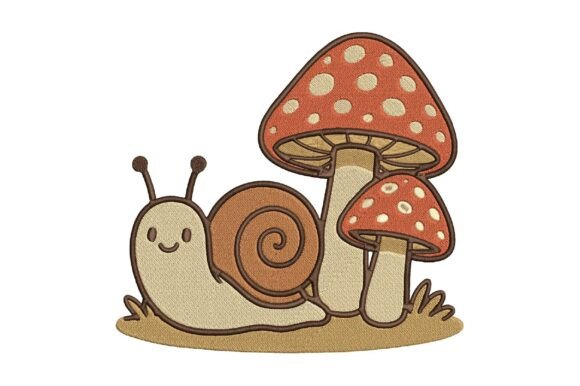
The title and description—“cute smiling snail beside whimsical mushrooms”—immediately signal warmth and approachability. That’s gold for businesses rooted in care: nurseries, florists, indie bakeries, pet brands, and mindful craft studios. Visually, Cute Snail and Mushroom Embroidery reads as intentionally handmade—not cartoonish, not overly polished, but confident in its gentle personality. It avoids the “too-cute” trap that undermines professionalism on staff uniforms or product packaging. Instead, it lands in that sweet spot: playful yet purposeful. For a nursery or children’s boutique, it feels age-appropriate without leaning into cliché. For a sustainable apothecary or botanical tea brand, it adds organic storytelling without sacrificing clarity.
Real-World Performance Across Business Applications
I ran Cute Snail and Mushroom Embroidery through seven common small business use cases—and its versatility surprised me.
- Embroidered patch: Works beautifully at 2.5"–3.5" height. The snail’s rounded shape and mushroom caps hold stitch definition well, even with moderate stitch density. Ideal for iron-on or sew-on patches on tote bags, denim jackets, or shop aprons.
- Apron embroidery: Placed on the chest or pocket, it softens utility with personality—especially effective for cafes, flower shops, or craft studios where staff interaction is warm and personal.
- Cap embroidery: At 2" wide, it maintains legibility on the front panel. The smiling snail reads clearly, and the mushroom stems provide vertical rhythm that balances curved surfaces.
- Tote bag design: As a centered chest-height motif, it adds visual weight without overwhelming canvas or cotton twill. Paired with minimalist branding (e.g., a single-line business name below), it becomes a cohesive tote bag design.
- Product packaging accent: Smaller versions (1.75") work as stitched labels on linen pouches, wooden crate tags, or handmade soap wraps—reinforcing authenticity and attention to detail.
- Staff uniforms & work shirts: On left-chest placement, it signals brand consistency without shouting. Especially effective when paired with neutral thread colors (ecru on oat, charcoal on navy).
- Etsy branding & customer gifts: As a stitched element on thank-you cards, mini towels, or gift tags, it elevates perceived value and strengthens buyer engagement through tactile, handmade product cues.
Where to Use Cute Snail and Mushroom Embroidery With Intention
This isn’t a one-size-fits-all embroidery file. Its charm relies on thoughtful execution. Avoid using it:
- Below 1.5" height—details like the snail’s smile or mushroom gills may blur or vanish;
- On highly textured fabric (e.g., bouclé wool or thick terry cloth) without extra stabilizer;
- With low-contrast thread colors on dark uniforms—test thread colors against actual fabric swatches;
- On curved surfaces like baseball caps without confirming hoop size compatibility and digitizing adjustments;
- In high-wash-frequency items (e.g., restaurant kitchen aprons) unless stitch density and underlay are verified for durability.
How It Shapes Brand Identity & Customer Trust
For small businesses, every embroidered patch or apron detail contributes to brand identity—not just aesthetics. Cute Snail and Mushroom Embroidery communicates care, slowness, and natural intention. That resonates deeply with audiences seeking authenticity over mass production. When customers see it stitched onto a florist’s tote or a nursery’s onesie packaging, they subconsciously associate your brand with gentleness, sustainability, and craftsmanship. That builds trust faster than any slogan. And because it’s visually distinct yet scalable, it supports visual consistency across digital mockups, printed assets, and physical merchandise—key for cohesive small business merch strategy.
Practical Designer Notes Before You Digitize or Order
Before committing to production, do these six checks:
- Test in black and white first—verify contrast and silhouette clarity without color distraction;
- Confirm minimum viable patch size—ask the seller if the embroidery file includes a 2" version optimized for caps or small labels;
- Review thread color recommendations—some versions may rely on variegated or specialty threads that affect cost and consistency;
- Inspect spacing between elements—tight gaps between snail and mushrooms can cause stitching issues on dense fabrics;
- Verify stabilizer requirements—woodland-themed designs often include fine stems or curves that need medium-cutaway or tear-away support;
- Create a printable mockup for client approval—show how Cute Snail and Mushroom Embroidery integrates with existing design assets, typography, and brand colors.
And always—always—confirm commercial licensing before using Cute Snail and Mushroom Embroidery on merchandise you sell. A digital embroidery file isn’t automatically cleared for resale; verify terms with the source. If you’re sourcing from Etsy or a design marketplace, look for explicit “commercial use” language—not just “personal use.”
Bottom line: Cute Snail and Mushroom Embroidery isn’t just decorative—it’s a strategic tool. When applied with intention, it transforms everyday items—caps, totes, aprons, patches—into quiet ambassadors for your small business. It says, We pay attention. We care about craft. We belong to something gentle and real. And in today’s market? That’s not whimsy. That’s value.