Bear Family Embroidery Design
First Impressions: Warmth, Movement, and Quiet Storytelling
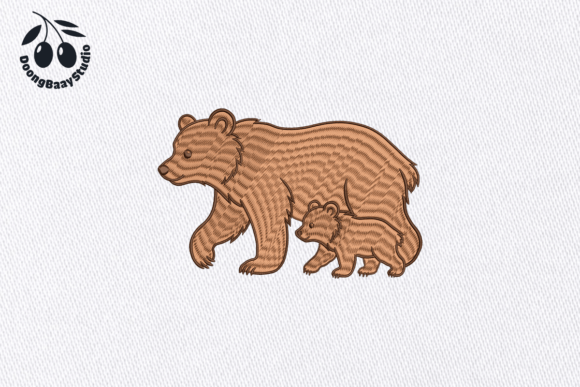
As a designer who’s stitched over 300 boutique apparel drops—mostly for small shops and Etsy sellers—I opened Bear Family Embroidery Design expecting charm. What I found was something more grounded: a gentle, unhurried composition where the mother bear’s stride and the cub’s slight tilt toward her create subtle narrative tension. There’s no cartoonish exaggeration—no oversized eyes or wink-and-nudge expressions. Instead, it leans into soft contour lines, balanced negative space, and a natural walking rhythm that reads beautifully at 3.5"–4.5" wide—the sweet spot for chest placement on adult sweatshirts.
The mood is tender but not saccharine; rustic but not rough. It lands somewhere between woodland journal sketch and heirloom textile—ideal for a boutique brand that values authenticity over trend-chasing. This isn’t a “cute” design in the viral-kid-tee sense. It’s meaningful—a quiet visual anchor for customers who choose handmade product over mass production because they care about intention behind every stitch.
How It Performs Across Sweatshirt Realities
Neutral sweatshirts (heather grey, oat, charcoal): The design breathes. Light thread colors—like ecru, warm taupe, or muted moss—lift effortlessly off mid-tone fabric without needing heavy underlay. No haloing, no sinking. You get clean definition, especially in the fur texture strokes along the bears’ backs.
Dark fabric (navy, black, deep forest green): Here’s where thread choice becomes your co-designer. A single tone won’t cut it—go dual: charcoal grey for outlines + creamy ivory for inner highlights. That contrast preserves dimensionality and prevents the design from flattening into silhouette. With proper stabilizer (more on that shortly), Bear Family Embroidery Design holds its shape even on brushed-back fleece.
Pastel and seasonal hues (dusty rose, sage, sky blue): This is where the design shines unexpectedly. Its organic flow complements soft color palettes without competing. On a relaxed-fit hoodie in pale lavender, it reads as quietly poetic—not decorative clutter. Perfect for spring capsule collections or cozy autumn layering shots.
Oversized hoodies and lounge-ready fits: Scale matters. At 4.25", the design anchors the chest without shrinking the garment’s silhouette. It doesn’t fight volume—it converses with it. And yes, it works just as thoughtfully on sleeve accents (scaled to 2.25") or centered across the back of a cropped pullover.
Design Integrity Meets Commercial Practicality
Let’s talk real-world embroidery concerns—not theory, but what happens when you load this machine embroidery design into your Bernina or Brother and press start.
- Stitch density: Judging by the description and implied wildlife motif, this isn’t a fill-heavy layout. Expect moderate density—enough to hold detail on knit fabric, light enough to avoid stiffness or puckering on lightweight French terry. Always verify actual stitch count before bulk runs—but if it’s optimized for apparel, you’ll feel that balance in the finished product.
- Fabric texture & stabilizer: Sweatshirt embroidery demands stability, not rigidity. For standard 8–10 oz fleece, a medium-weight cutaway + light tear-away topper gives clean topside texture and secure backing. Skip the heavy mesh—it fights the drape you want in boutique-grade apparel.
- Hoop size & placement: Designed for standard 4"x4" or 5"x7" hoops? Likely. But check your embroidery file metadata—some woodland animal motifs stretch vertically. If it’s taller than 4", you’ll need to adjust hoop positioning on curved chest areas or shift to a larger hoop for consistent tension.
- Small-size readability: At 3" wide, the cub’s ear and paw details must remain legible. If those vanish into blur, the emotional core dissolves. Trust your eyes during test stitching—not just on white fabric, but on your actual production base.
- Washing durability: Tight satin stitches around the bears’ outlines? Yes—that’s your armor against fraying. But loose fill areas or long satin runs on thin limbs? Those need testing. Run a sample through a gentle cycle, air-dry flat, and inspect for pull or distortion.
Why This Design Elevates Your Boutique Brand—Beyond Aesthetics
For the Etsy seller uploading their third sweatshirt listing this month—or the small shop owner building a cohesive lifestyle line—Bear Family Embroidery Design isn’t just decoration. It’s a trust signal.
Customers scrolling past dozens of generic “mom life” or “forest vibes” designs pause here because the bond feels earned, not imposed. That translates directly to higher perceived value: buyers accept a $78 price point when the embroidery tells a story they recognize—care, continuity, quiet strength.
In lifestyle photography? It performs like a pro. No busy background needed. A simple linen backdrop, natural light, and one well-placed Bear Family Embroidery Design on a slouchy hoodie says everything about brand voice: calm, intentional, nature-rooted. Pair it with a printable mockup showing the same design on a charcoal crewneck and a sage oversized hoodie—and you’ve built visual recognition across SKUs without repeating logos.
And for the handmade presentation? It delivers. Unlike vector-heavy patterns that scream “digital,” this woodland animals motif carries hand-guided rhythm—even in machine execution. That nuance reassures customers they’re supporting craft, not just code.
A Final Note to Small Shop Creators
This embroidery design works because it respects both the wearer and the maker. It doesn’t ask for gimmicks—no metallic threads, no excessive layers, no fragile elements that buckle under commercial wear. It asks for thoughtful thread selection, appropriate stabilizer, and attention to fabric behavior. In return, it gives you a timeless, ownable motif that strengthens your custom apparel identity across seasons.
If you're sourcing for a limited drop—whether for holiday gifting, a nature-themed capsule, or simply to deepen your small shop product storytelling—Bear Family Embroidery Design earns its place. Just remember: always test on your exact fabric, verify your digital embroidery file specs, and let the quiet strength of the design speak for itself.